Quick answer: Yes, the water in Bellflower is hard, and in much of the city it is very hard. Liberty Utilities, which supplies most of Bellflower along with Norwalk and Artesia, reports hardness of 191 to 280 ppm (11.1 to 16.3 grains per gallon) in the imported Metropolitan Water District water that made up about 62 percent of its 2025 supply, and 250 to 260 ppm (about 15 gpg) in the Central Basin well water that made up the rest. Golden State Water’s Bellflower-Norwalk system reports 8 to 30 gpg with an average of 18. Anything above 10.5 gpg is very hard, so the only real question in Bellflower is how hard your particular address runs on a given month.
Why Bellflower’s water is hard: two sources, both mineral-rich
Bellflower drinks from a blend. Liberty Utilities (the former Park Water Company) buys roughly two-thirds of its water from the Metropolitan Water District, which treats Colorado River and State Water Project water at its Diemer plant in Yorba Linda before sending it west. Colorado River water in particular is rich in dissolved calcium and magnesium; MWD’s own report put Diemer plant hardness at 235 to 305 ppm for 2024 and 191 to 280 ppm for 2025.
The remaining third comes from Liberty’s wells in the Central Basin, the groundwater body under Bellflower, Lakewood, Downey, Norwalk, Cerritos and Long Beach. Water recharging the basin at the Montebello Forebay spreading grounds in Pico Rivera dissolves minerals from the sand and gravel on the way down. Liberty’s wells came out at 250 to 260 ppm hardness in 2025, essentially the same as the imported water. Neither source is softened before delivery. Utilities treat for health standards, and hardness is not one of them.
Golden State Water’s Bellflower-Norwalk system, which serves parts of both cities (Golden State also serves about 6,000 Lakewood homes east of the San Gabriel River), shows the widest spread in the area: 137 to 505 mg/L, or 8 to 30 gpg, with an 18 gpg average.
How hardness differs across the service area
Hardness changes noticeably across our territory, from Culver City and Inglewood through the beach cities to Long Beach and east to Whittier. The 2025 utility reports show the pattern:
Imported-water systems run hardest. Golden State Water’s Culver City system is 100 percent MWD water and reports 8 to 16 gpg (average 12). Liberty’s Bellflower system is mostly MWD water at 11 to 16 gpg.
Local-groundwater cities vary. Lakewood pumps all of its water from 11 deep wells and reports 7.13 gpg (5.1 to 8.88), the lowest published figure among the groundwater cities. Cerritos, almost entirely on its own wells, averages 180 mg/L (about 10.5 gpg). Liberty’s Compton wells run 8.2 to 9.9 gpg. Downey, on 19 city wells, does not print a hardness figure at all, and neither does Torrance, so a home test is the only way to know in those two cities.
Long Beach is split by zone. Long Beach Utilities reports its MWD Zone at 220 ppm (12.8 gpg, up to 17.5) and its larger Blended Zone, fed from the Groundwater Treatment Plant, at 76 ppm (4.4 gpg), which the U.S. Geological Survey classifies as moderately hard. The utility does not publish a map of the two zones, so a Bixby Knolls or Los Altos address and a Belmont Shore address can test very differently.
What hard water does inside a Bellflower home
Hard water is a maintenance problem, not a health problem, and it compounds quietly for years. These are the three complaints that bring most Bellflower, Lakewood and Downey homeowners to us.
1. Scale in water heaters, dishwashers and pipes
What homeowners notice: A water heater that pops or rumbles, takes longer to recover, and fails earlier than it should; a dishwasher heating element coated in white; a showerhead that sprays sideways; tankless units that throw error codes.
What causes it: Heat drives calcium and magnesium out of solution. At 11 to 16 grains per gallon, a family of four runs tens of pounds of mineral through the water heater every year, and a share of it stays behind as scale.
Why it matters: A layer of scale on a heating element acts as insulation, so the heater burns more gas or electricity to do the same job.
2. Spots, film and soap scum
What homeowners notice: Cloudy drinking glasses, a white film on the shower door that returns days after cleaning, chalky rings at the faucet base, and tile grout that never looks clean.
What causes it: When a droplet of hard water evaporates, the minerals in it stay. Calcium and magnesium also bind with soap to form a sticky curd instead of lather.
Why it matters: Beyond the cleaning time, homes on hard water use noticeably more dish detergent, laundry detergent and shampoo, and towels and dark laundry come out stiff and faded.
3. Dry skin and hair
What homeowners notice: Skin that feels tight or itchy after a shower, hair that feels coated and hard to manage, and lotion that seems to disappear.
What causes it: The soap curd that forms in hard water rinses poorly, so a thin film of minerals and soap residue stays on skin and hair.
Why it matters:
A whole-house softener such as Culligan’s Aquasential® Smart High Efficiency Water Softener removes calcium and magnesium where the water enters the home, so every shower, appliance and faucet gets soft water. It monitors actual water use and regenerates only when the resin needs it, which matters on 15-grain water where a timer-based unit would waste salt. Details and options are on our Bellflower water softeners page.
How to check your home’s water hardness in Bellflower
Three steps, from the general to the specific.
Read your utility’s annual report. Liberty Utilities publishes its Consumer Confidence Report each year at california.libertyutilities.com, and it prints hardness in both ppm and grains per gallon. Golden State Water’s Bellflower-Norwalk report is at gswater.com/norwalkCCR, and Long Beach Utilities posts its report at lbutilities.org. These reports describe the system, not your tap, and Downey and Torrance do not publish a hardness number.
Look for the signs. Scale on the showerhead, spots that survive the dishwasher’s rinse aid, a noisy water heater, soap that will not lather. Any two of those together on 11-to-16-grain water is not a coincidence.
Test the water at your house. This is the step that determines what size softener you need. Because the MWD-to-groundwater blend shifts through the year and Golden State’s range alone spans 8 to 30 gpg, only a reading at your kitchen tap gives you a number to size from. Culligan of Bellflower’s in-home test is free, takes about 20 minutes and measures hardness along with chlorine, total dissolved solids, pH and iron. You can read more on our Bellflower water testing page.
FAQs about Bellflower water hardness
How hard is the water in Bellflower, CA?
Very hard by the USGS scale. Liberty Utilities’ 2026 report lists 191 to 280 ppm (11.1 to 16.3 grains per gallon) for its imported water and 250 to 260 ppm (about 15 gpg) for its wells. Golden State Water’s Bellflower-Norwalk system averages 18 gpg with a range of 8 to 30.
Does Liberty Utilities soften the water in Bellflower?
No. Liberty treats its well water with chlorine and the MWD water it buys has been filtered and disinfected at the Diemer plant, but hardness is not a drinking water standard and no utility in the area removes it. Softening is done at the home.
Will a pitcher filter or refrigerator filter soften Bellflower water?
No. Those filters are carbon-based and target taste, odor and certain contaminants in drinking water. They do not exchange calcium and magnesium, and they treat only the water you pour through them, not the water heater, shower or washing machine where hardness does its damage.
Is Long Beach water as hard as Bellflower water?
It depends on the zone. Long Beach Utilities’ MWD Zone averages 12.8 gpg, similar to Bellflower, while the Blended Zone served from the city’s Groundwater Treatment Plant is in the moderately hard range. Because the utility does not map the zones to neighborhoods, a free test at your address is the reliable way to know.
Start with a free hard water test from Culligan of Bellflower
Culligan of Bellflower has been treating hard water for homes and businesses across Bellflower, Lakewood, Downey, Norwalk, Cerritos, Whittier, Long Beach, Compton, Carson, Torrance, Redondo Beach, Manhattan Beach, Gardena, Inglewood and Culver City for decades. Our technicians work on Liberty Utilities, Golden State Water, Cal Water and city-system water every day, so they know how the blend changes from Culver City to Cerritos and what size system a given home actually needs.
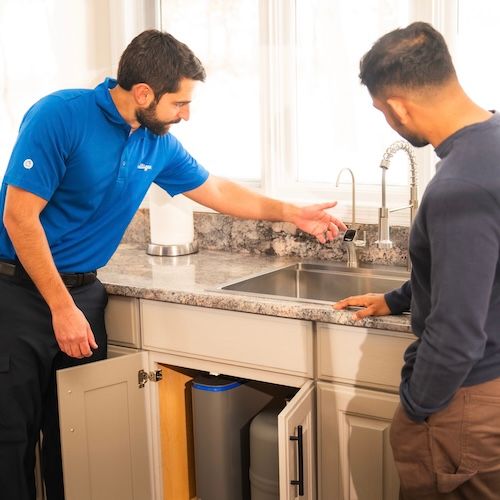
When you schedule a free in-home water test, a local specialist tests at your tap, explains the result in plain language and, if a softener makes sense, lays out rental and purchase options in a written quote. There is no obligation, and the test answers the question this article started with for your own address.
Ready for better water? Schedule your free in-home water test and consultation with Culligan of Bellflower today.