Quick answer: Yes. Every public water system around Ocala pumps from the Floridan Aquifer, a limestone formation, and limestone makes hard water. Utilities in the area that publish a hardness figure report 137 to 176 mg/L, which works out to roughly 8 to 10 grains per gallon and sits squarely in the “hard” classification. The City of Ocala softens its water at the treatment plant, which takes some of the edge off for city customers, but it does not publish a finished-water number, and Marion County Utilities does not soften at all. Private wells in Marion County draw the same limestone water without any softening. A test at your own tap is the only way to know your exact level.
Most people in Ocala meet hard water before they ever hear the term. The faucet base that grows a white crust no matter how often you wipe it. The shower door that films over a day after you squeegee it. Glasses that leave the dishwasher looking dusty. A water heater that has started to rumble. All of those are calcium and magnesium, dissolved out of the aquifer and left behind wherever water evaporates or is heated.
Hardness varies across Marion County, but the picture is consistent: whether you live in the city limits, in Silver Springs Shores or Marion Oaks on county water, in The Villages, or on a well toward Citra or Dunnellon, you have hard water. Here is why, how to check your level and what a softener does about it.
Is municipal or well water harder in Ocala?
Generally, well water. Both start from the same place, but what happens between the aquifer and your tap is different.
The City of Ocala Water Resources draws from six wells in the Upper Floridan Aquifer and, according to its water quality report, softens the water at the plant before chlorinating it. That is unusual in Florida; most utilities leave hardness alone because it is not a health standard. Plant softening lowers hardness but rarely brings water into the “soft” range, and the city’s report does not list a finished hardness value, so the number at your tap depends on where you live and how the plant was running that week. Marion County Utilities, which serves communities like Silver Springs Shores, Marion Oaks and much of the unincorporated county through its East Side and West Side consolidated systems, chlorinates, aerates and filters for sediment but does not soften, so its customers receive the aquifer’s full hardness.
For a sense of what that full hardness looks like, look at neighboring systems on the same aquifer that publish a figure. The Village Center Service Area in The Villages reported 165 mg/L in its 2025 report and 137 mg/L in 2024; Little Sumter Service Area reported 176 mg/L and North Sumter Utilities 165 mg/L. Gainesville Regional Utilities lists about 140 mg/L, or 8.2 grains per gallon, in its water quality FAQ. Divide mg/L by 17.1 to get grains per gallon: that range is 8 to 10.3 gpg. The USGS classifies 120 to 180 mg/L as hard and anything above 180 mg/L as very hard.
Private wells are a different matter. No utility treats or tests them, and about 139,000 Marion County residents, roughly four in ten, rely on one according to the U.S. Geological Survey. A well in Reddick, Anthony, Ocklawaha or Belleview pulls Floridan water straight from the limestone with every grain of hardness intact, and depth and construction mean two wells on the same road can test several grains apart. Well owners should also expect iron and sulfur to ride along with the hardness, which affects what kind of softener works.
Hard water problems Ocala homeowners deal with
Hard water will not make you sick. It will, quietly and steadily, cost you money and cleaning time. These are the three complaints that bring most Ocala customers to us.
1. Scale in water heaters and appliances
What homeowners notice: A water heater that rumbles, recovers slowly and runs up the electric bill; a white crust on the dishwasher element; showerheads that spray sideways; appliances that die young.
What causes it: Heat drives dissolved calcium and magnesium out of solution, where they harden into scale. At 8 to 10 grains per gallon, a water heater can collect a thick layer within a couple of years.
Why it matters: Scale on a heating element acts like insulation, so the heater burns more energy to do the same work, and inside pipes and valves it restricts flow. Over time it shortens the life of water heaters, dishwashers, washing machines and especially tankless units.
2. Spots, film and soap scum
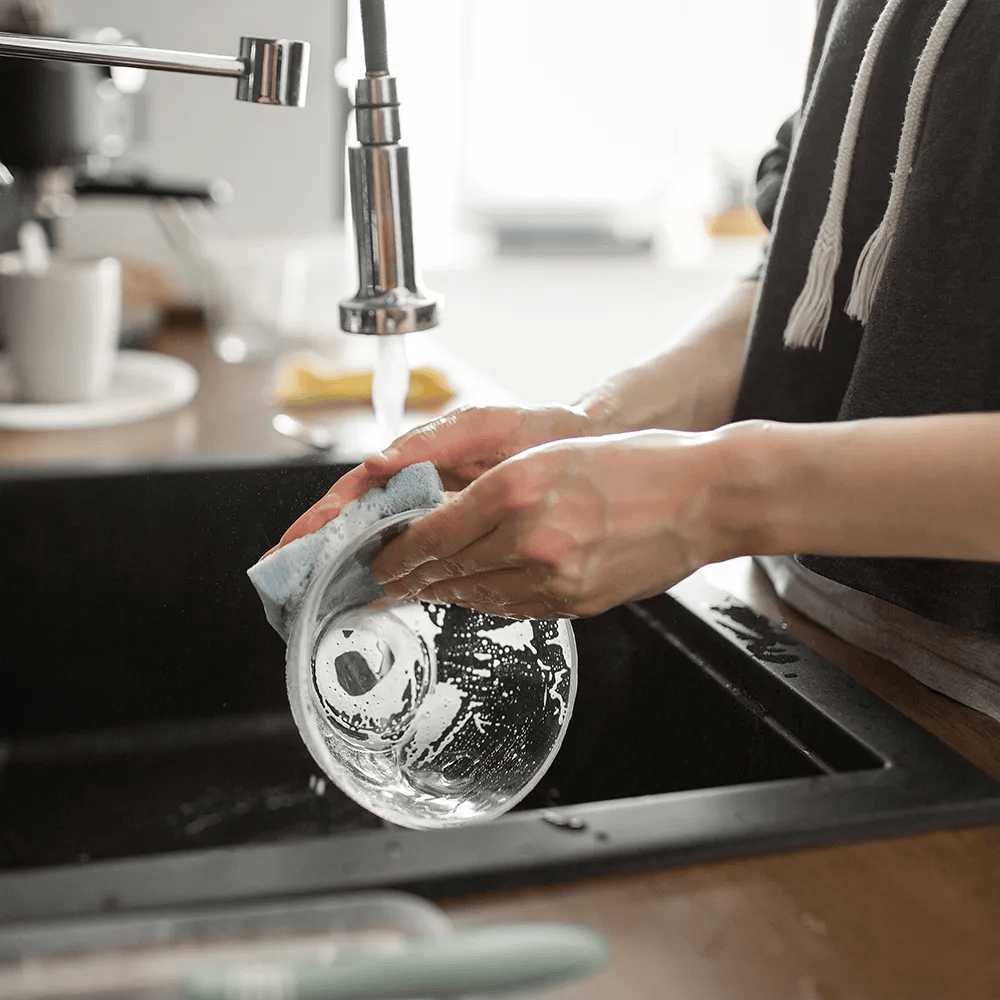
What homeowners notice: Cloudy glassware out of the dishwasher, a haze on shower glass and tile, chalky rings around faucets and drains, and soap scum that takes real scrubbing.
What causes it: Calcium and magnesium bond with soap to make a sticky curd instead of lather, and they are left behind as a mineral deposit when water dries on a surface.
Why it matters: Beyond the cleaning time, hard-water homes burn through noticeably more detergent, shampoo and cleaning product to get the same result, and glass and tile never look fully clean.
3. Dry skin and dull hair
What homeowners notice: Skin that feels tight or itchy after a shower, hair that feels coated and hard to manage, and lotion that never seems to be enough.
What causes it: Minerals keep soap and shampoo from rinsing away completely, leaving a thin film on skin and hair.
Why it matters: That film blocks moisture. Many customers tell us their skin and hair feel different within two or three weeks of installing a softener, and they use less product afterward.
A whole-home softener removes the calcium and magnesium at the point where water enters the house, so every tap, shower and appliance gets soft water. For most Ocala homes on city or county water, the Aquasential® Smart High Efficiency Water Softener is the right fit; it meters actual use and regenerates only when needed. The Aquasential® Advantage Whole Home Water Softener and the Aquasential® Select Series Water Softeners cover homes that want dependable softening in a simpler package. Well homes with iron usually need the Softener-Cleer combination, because iron fouls a standard softener’s resin. You can compare the options on our Ocala water softeners page.
How to check your home’s water hardness in Ocala
Three steps, from the general picture to your specific tap.
Read the utility’s report. The City of Ocala’s water quality report explains the source and treatment but does not list a hardness value, and neither do Marion County Utilities’ reports. The Villages’ reports do, and they are a useful benchmark for untreated Floridan water in this region. Any utility report describes the system as a whole, not the water at your house.
Look for the signs. Crust on the showerhead, spots that survive the dishwasher, soap that will not lather, a water heater that has become noisy. Two of those together almost always mean hard water.
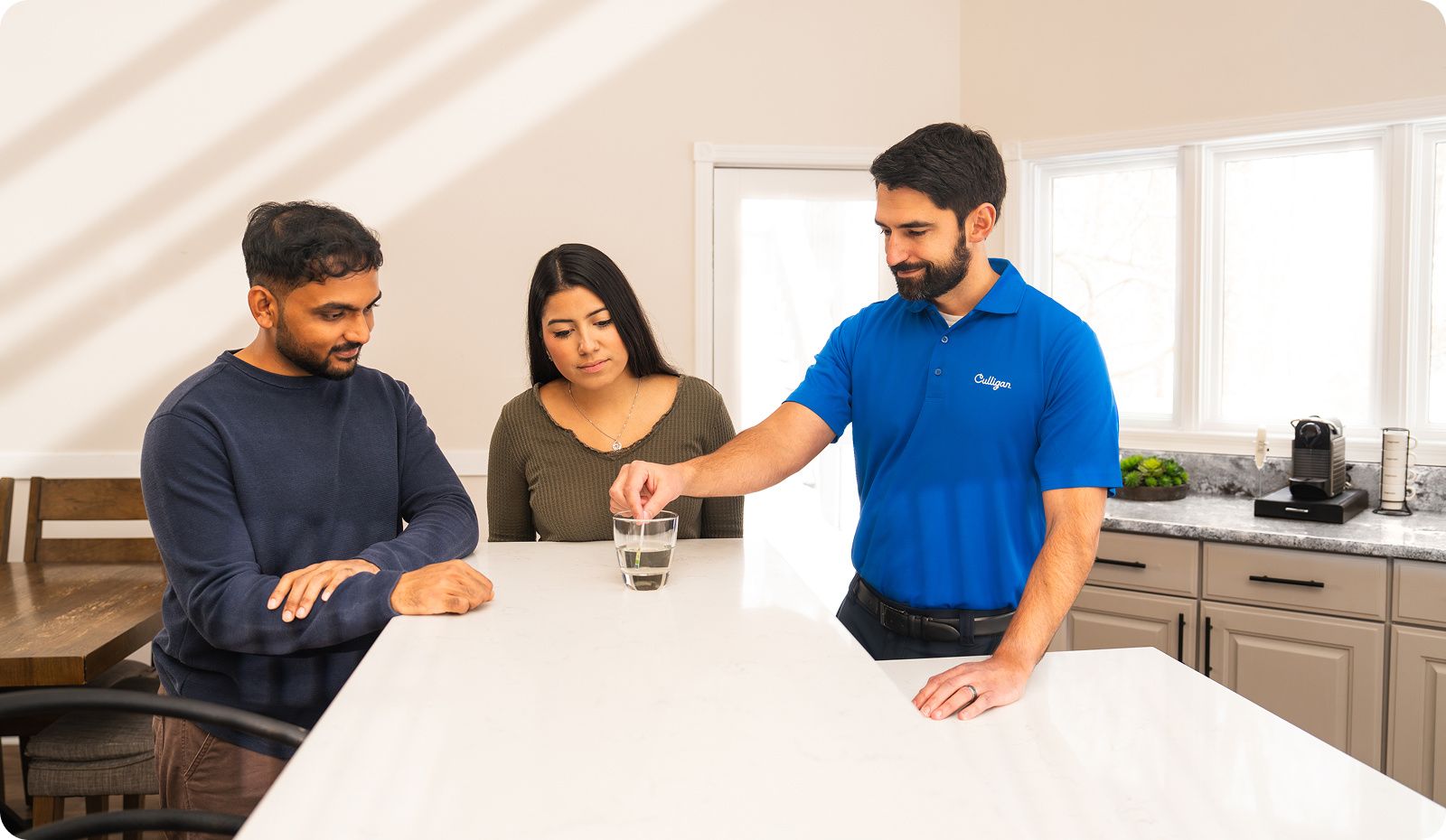
Test at your tap. This is the step that matters, because a softener is sized by the number at your kitchen sink. Culligan of Ocala’s in-home test is free, takes about 20 minutes and measures hardness along with chlorine, total dissolved solids, pH and iron; on a well, the iron reading decides whether a standard softener or a combination unit is the right call. Details are on our Ocala water testing page.
FAQs about Ocala water hardness
How hard is the water in Ocala, FL?
Hard. Area systems on the Floridan Aquifer that publish a figure report 137 to 176 mg/L, about 8 to 10 grains per gallon. The City of Ocala softens at the plant but does not publish a finished number, so city customers may test somewhat lower. Private wells vary by property and are frequently harder than any utility water.
Does the City of Ocala soften its water?
Partially. The city’s water quality report states the water is softened, chlorinated and fluoridated at the plant. Plant softening lowers hardness but does not produce soft water, and Marion County Utilities, which serves much of the county outside the city limits, does not soften at all. Homeowners who want fully soft water install their own ion-exchange softener.
Will a pitcher filter soften hard water in Ocala?
No. Pitcher filters target taste and certain drinking-water contaminants and do nothing about calcium and magnesium. Hardness does its damage in the water heater, dishwasher and shower, which a pitcher never touches. Treating the whole house requires a softener.
Is well water around Ocala harder than city water?
Usually. Wells in Reddick, Citra, Ocklawaha and the rural west side of Marion County pull Floridan water with no plant softening and often add iron and hydrogen sulfide to the mix. A softener-and-iron-filter combination is the common solution on wells here.
Start with a free hard water test from Culligan of Ocala
Culligan of Ocala has been softening Floridan Aquifer water for homes across Ocala, Belleview, Dunnellon, Silver Springs, Summerfield, The Villages, Lady Lake, Gainesville, Williston and Crystal River for decades. Our technicians work on city water, Marion County Utilities water and private wells every day, so we know the hardness patterns in each part of the area and what size system a given home needs.
When you schedule a free in-home test, a local specialist measures your water at the tap, explains the results in plain language and, if a softener makes sense, walks you through rental and purchase options with a written quote. No obligation.
Ready for better water? Schedule your free in-home water test and consultation with Culligan of Ocala today.