Quick answer: Yes, the water in Lompoc is very hard. The City of Lompoc’s 2025 Water Quality Report lists finished-water hardness at 293 parts per million, about 17 grains per gallon, even after the city’s plant runs the water through a softening step. Vandenberg Village CSD reports 21 gpg, Mission Hills CSD about 15 gpg, and Solvang’s city wells averaged 616 ppm, roughly 36 gpg, from 2022 through 2024. Private wells in the Lompoc and Santa Ynez uplands land in the same territory. Anything above 10.5 gpg is classified as very hard, so a home test is about exactly how hard, not whether.
Most people in the Lompoc Valley figure out they have hard water within a week of moving in: the shower door hazes over, the kettle grows a white crust, and the faucet base collects a chalky ring that comes back no matter how often you scrub it. Those are the fingerprints of calcium and magnesium, and the Santa Ynez River Valley has a lot of both. Every public supply we work with, from Lompoc and Vandenberg Village out to Buellton, Solvang, Santa Ynez and Los Olivos, publishes a hardness figure in the hard or very hard range. There is also a local wrinkle: Lompoc and Vandenberg Village restrict brine discharge from conventional salt softeners, which changes how homes here get soft water.
Is municipal or well water harder in Lompoc?
Both are hard, because both come out of the same ground. Lompoc does not draw from a reservoir; the city pumps its entire supply from ten wells in the Lompoc Plain Sub-Basin of the Santa Ynez River Valley groundwater basin. Water recharging the basin moves through marine sediments rich in calcium, magnesium and sulfate and carries those minerals into the wells.
Lompoc is unusual in one respect: the city’s plant includes a softening step, and its report notes that “disinfection and softening processes add sodium to the water.” That takes the edge off, but finished water still tests at 245 to 318 ppm of hardness, 14 to 19 gpg. Hardness is not a health standard, so no utility is required to remove it.
North of town, Vandenberg Village CSD and Mission Hills CSD run their own wells in the Lompoc Upland aquifer and do not soften. Vandenberg Village’s 2025 report lists 362 ppm, range 210 to 410, and states the figure plainly as 21 grains per gallon. Mission Hills reports 260 ppm, about 15 gpg. Homes on Burton Mesa, in Mesa Oaks and across Vandenberg Village see heavy scale as a result.
In the Santa Ynez Valley the picture is harder still. Improvement District No.1 of the Santa Ynez River Water Conservation District, which serves Santa Ynez, Los Olivos and Ballard and sells water to Solvang, reports groundwater hardness of 320 to 490 ppm, an average of 425 ppm or about 25 gpg. Solvang’s own wells averaged 616 ppm. Both agencies blend in State Water Project water from the Central Coast Water Authority when it is available, which averaged about 90 ppm in ID No.1’s 2025 report, so hardness at a Solvang or Santa Ynez tap swings with the season and the state allocation.
Private wells in the Santa Ynez subbasin, around Buellton and in the rural Lompoc uplands draw from the same formations without any blending, so 20 to 40 gpg is routine. The exact figure depends on depth and location, which is why we test every well before recommending anything.
Hard water problems Lompoc homeowners run into
Hard water is not a health concern. It is an expense that accumulates quietly. These are the three complaints we hear most often.
1. Scale in water heaters, dishwashers and plumbing
What homeowners notice: A water heater that rumbles or recovers slowly, a tankless unit throwing error codes, showerheads losing pressure, and appliances that need repair sooner than they should.
What causes it: When hard water is heated, calcium and magnesium come out of solution and bond to the nearest hot surface as scale. At 17 to 25 gpg that happens fast, and Lompoc’s high sulfate adds calcium sulfate deposits that are harder to dissolve than ordinary scale.
Why it matters: Scale on a heating element acts as insulation, so the heater burns more energy for the same hot water, and over years it narrows pipes and shortens the life of every appliance that heats water.
2. White spots, film and crust on surfaces
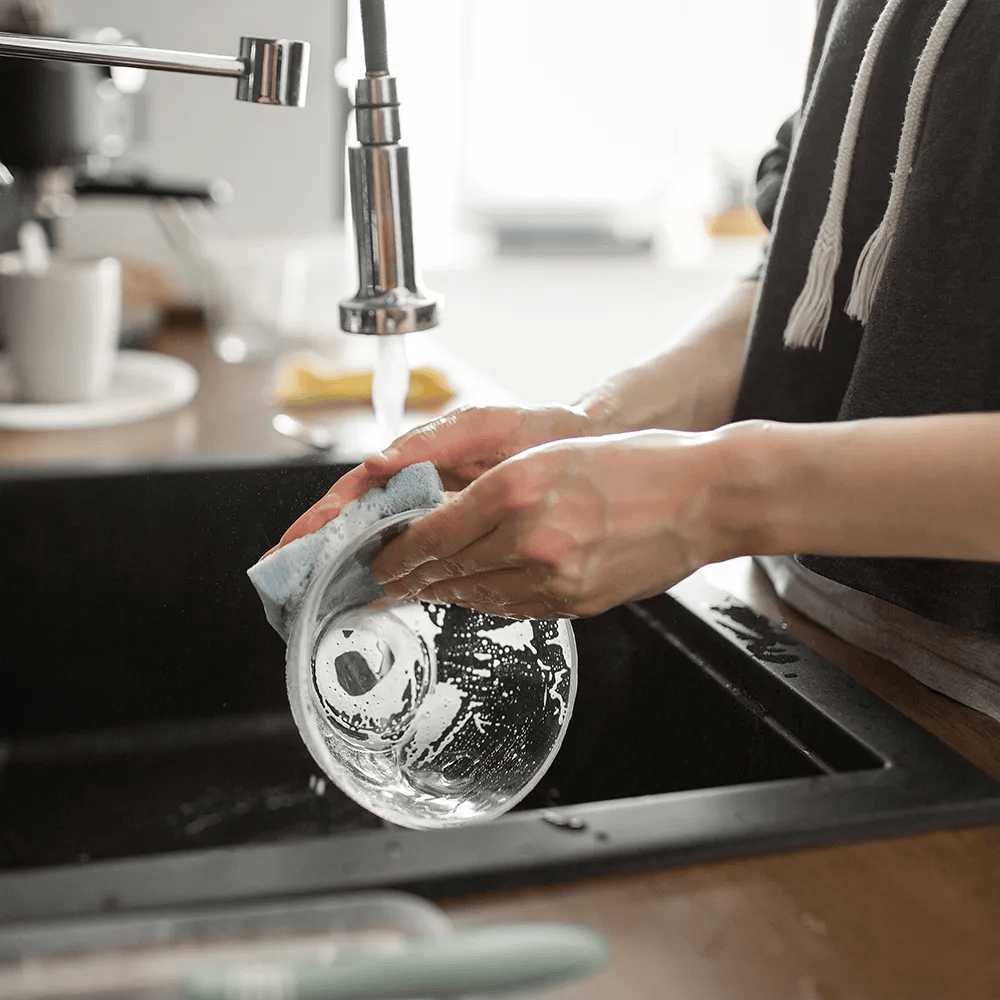
What homeowners notice: Cloudy glassware out of the dishwasher, a white haze on shower glass and tile, chalky rings at faucet bases and around sprinkler heads, and soap scum that takes real scrubbing.
What causes it: Minerals left behind when water evaporates, plus the residue formed when calcium reacts with soap. Lompoc’s 817 ppm of total dissolved solids means more material to leave behind than in most California cities.
Why it matters: Homes with water this hard use noticeably more detergent and soap, and glassware and fixtures etch permanently over time.
3. Dry skin and dull hair
What homeowners notice: Skin that feels tight or itchy after a shower, hair that never feels rinsed, and more lotion and conditioner than you used to need.
What causes it: Hard water keeps soap from lathering and rinsing cleanly, leaving a mineral-and-product film on skin and hair.
Why it matters: That film blocks moisture. Skin and hair are often the first thing customers notice improving after soft water is installed.
Soft water fixes all three where water enters the house. In the Santa Ynez Valley, where most rural homes are on septic rather than a sewer with brine limits, that usually means a whole-home softener such as Culligan’s Aquasential® Smart High Efficiency Water Softener. In Lompoc and Vandenberg Village it usually means a Portable Exchange Tank, described below. Compare the options on our Lompoc water softeners page.
Why Lompoc restricts conventional water softeners
Lompoc Municipal Code Chapter 13.16 prohibits discharging the waste from self-regenerating water softeners into the city sewer. The city’s salt brochure explains why: each regeneration sends roughly 40 to 150 gallons of brine down the drain one to three times a week, exceeding the city’s wastewater limits for sodium (270 mg/L) and total dissolved solids (1,100 mg/L). The Lompoc Regional Wastewater Reclamation Plant cannot remove salt, so it ends up in the Santa Ynez River basin the city’s wells draw from. Vandenberg Village CSD, which sends sewage to the same plant, limits brine discharge under its Ordinance 2.21, and the City of Solvang bars self-regenerating softeners at commercial properties and encourages residents to use exchange tanks.
The compliant way to get soft water in these systems is Culligan’s Portable Exchange Tank service. We deliver a softener tank regenerated at our facility, connect it where water enters your home, and swap it on a schedule matched to your hardness and water use. There is no salt to carry, no brine to the sewer and no drain line to plumb, and the water at your taps is the same soft water a conventional softener delivers. It is also the standard approach for restaurants, tasting rooms and other businesses under Lompoc’s and Solvang’s commercial rules.
How to check your home’s water hardness in Lompoc
Three steps, from least to most precise.
Read your utility’s report. The City of Lompoc posts its annual report at cityoflompoc.com; Vandenberg Village CSD, Mission Hills CSD, Solvang and ID No.1 publish their own. All list hardness. The report gives the system average, not what reaches your tap.
Look for the signs. Scale on the showerhead, spots that survive the dishwasher, a noisy water heater, soap that will not lather. In this valley, two of those together is a safe bet.
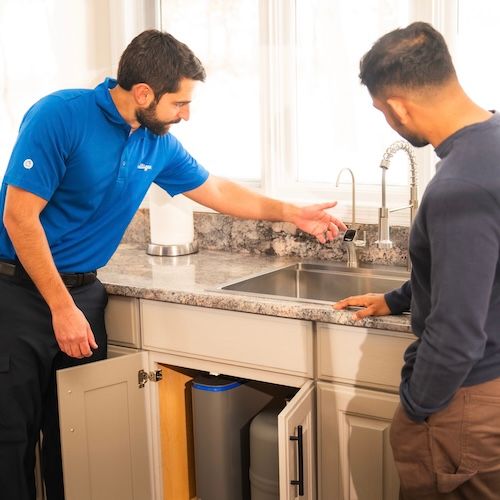
Test the water at your home. This is the number that sizes a system. Solvang and Santa Ynez customers get a shifting blend, and private wells vary parcel to parcel, so only a reading at your own tap tells us what you have. Culligan of Lompoc’s in-home test is free, takes about 20 minutes and measures hardness along with chlorine, total dissolved solids, pH and iron.
FAQs about Lompoc water hardness
How hard is the water in Lompoc, CA?
The City of Lompoc reports 293 ppm, about 17 grains per gallon, with a range of 245 to 318 ppm in its 2025 report. That is very hard by the usual scale. Vandenberg Village CSD reports 21 gpg and Mission Hills CSD about 15 gpg. Private wells vary by property, so well owners should test for a home-specific number.
Does the City of Lompoc soften the water?
Partly. The city’s treatment plant includes a softening step, which is why Lompoc’s finished water is lower in hardness than the raw groundwater. It still leaves the tap at 14 to 19 gpg, so most homes that want scale-free water add their own treatment.
Can I install a regular salt water softener in Lompoc?
Not one that regenerates at the house and drains to the city sewer. Lompoc Municipal Code Chapter 13.16 prohibits that discharge, and Vandenberg Village CSD limits it as well. A Portable Exchange Tank, regenerated off site, is the compliant alternative and is what most of our Lompoc customers use. Homes on private septic in the Santa Ynez Valley have more flexibility.
Is well water in the Santa Ynez Valley harder than Lompoc city water?
Usually. Private wells around Santa Ynez, Los Olivos and Buellton draw from the same formations that give ID No.1 an average of 425 ppm, about 25 gpg, and Solvang’s wells 616 ppm, with no State Water blended in. Twenty to 40 gpg is routine, and many wells add iron or high dissolved solids on top.
Start with a free hard water test from Culligan of Lompoc
Culligan of Lompoc has treated Santa Ynez River Valley water for homes in Lompoc, Vandenberg Village, Mission Hills, Vandenberg Space Force Base, Buellton, Solvang, Santa Ynez, Los Olivos and Los Alamos for decades, and we know which approach fits each sewer district’s rules. A local specialist measures your water at the tap, explains the results plainly and, if soft water makes sense, sizes a softener or Portable Exchange Tank for your home with rental and purchase options in a written quote.
Ready for better water? Schedule your free in-home water test and consultation with Culligan of Lompoc today.