Quick answer: Yes, with testing and, where the results call for it, treatment. Private wells in the Redland, Homestead’s farm belt, the acreage west of Kendall, and Southwest Ranches and western Davie pump the Biscayne Aquifer exactly as it is, with no plant softening, disinfecting or sampling it. USGS sampling of that aquifer found calcium of 58 to 130 mg/L, nitrate occasionally above 2 mg/L near farmland, traces of agricultural pesticides in every well tested, and saltwater pushing inland at the aquifer’s base south of Homestead. None of those make a well undrinkable; all of them are reasons the Florida Department of Health asks owners to test for bacteria and nitrate every year.
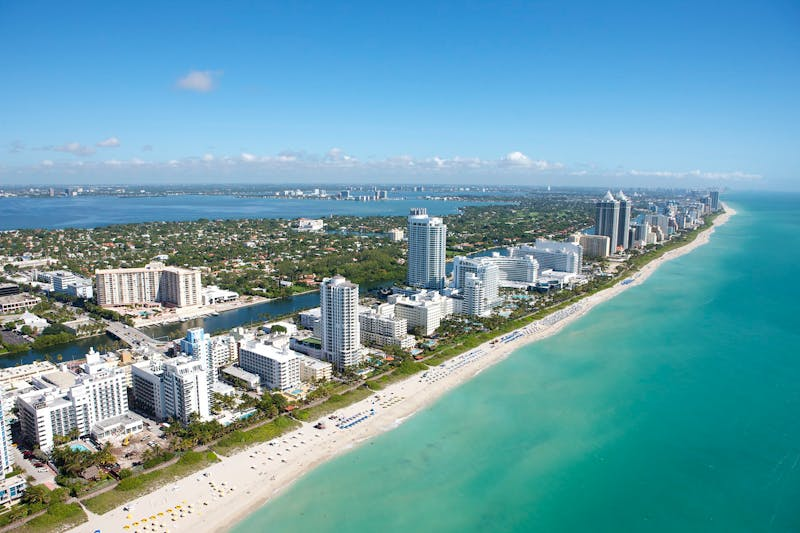
Most of South Florida is on city water. USGS’s most recent county estimate puts about 25,000 Miami-Dade residents and fewer than 8,000 Broward residents on their own wells, roughly one percent of the two counties combined, and the Keys have none at all. But that one percent is concentrated in a handful of places we know well: the five-acre lots and nurseries of the Redland, the groves and packing houses around Homestead and Florida City, the horse properties of Southwest Ranches, and the older ranch homes of western Davie and Cooper City. If you own one of those homes, the water quality is your job.
Here is what owners in those areas should understand about the aquifer under them, the problems that show up most often, and how to fix them.
Why a Miami-Dade well is different from city water
Miami-Dade Water and Sewer, Hollywood, Miramar and the Florida Keys Aqueduct Authority all pump the same Biscayne Aquifer your well does. The difference is what happens next. The utilities lime-soften or membrane-filter the water, disinfect it with chloramine or chlorine, sample it hundreds of times a year and publish the results. A private well skips all of it. The Florida Department of Health does not require routine testing of existing private wells, so unless you arrange it, nobody looks.
The Biscayne Aquifer is also unusually exposed. It is shallow, 50 to 200 feet down, made of porous limestone that water moves through quickly, and it sits directly beneath farms, septic systems, canals and the coast. That is what makes it so productive and also what makes well water quality here change with the season, the rain and the neighbors. A result from five years ago is not a result for today.
Common well water problems around Miami, Homestead and Southwest Ranches
Culligan of Miami has treated well homes across south Miami-Dade and southwest Broward for decades. These are the issues we find most often, and what public data says about each.
1. Hard water
What homeowners notice: heavy white scale on faucets and showerheads, a tankless heater that needs descaling, cloudy glassware, stiff laundry, dry skin.
What causes it: the aquifer is limestone. USGS sampled 30 Biscayne public-supply wells at depths of 40 to 165 feet and found calcium of 58 to 130 mg/L, a median of 88.5 mg/L. As calcium hardness that works out to roughly 8 to 19 grains per gallon, hard to very hard on the USGS scale, and FKAA, which pumps the same aquifer west of Florida City, calls its raw water very hard.
Why it matters: a well home gets that full number, with none of the lime softening city customers receive. Scale shortens the life of water heaters, dishwashers and irrigation equipment and drives up detergent use.
How to fix it: an Aquasential® Smart High Efficiency Water Softener sized to the tested hardness. Homes with iron as well usually go with Softener-Cleer, which addresses both in one unit.
2. Iron and orange staining
What homeowners notice: water that runs clear but leaves rust-colored rings in toilets, orange streaks on white laundry and stains on pool decks and driveways where sprinklers hit.
What causes it: dissolved iron in the shallow aquifer, especially where organic soils overlie the limestone. FKAA’s own taste-and-odor guidance notes that iron adds a rusty, reddish-brown color and that a black tint usually means iron plus manganese; older galvanized pipe in the house can add more.
Why it matters: iron at well above the 0.3 mg/L aesthetic standard is a cleaning and staining problem, and it fouls softener resin if it is not removed first.
How to fix it: an Iron-Cleer® or Iron-OX5 filter ahead of the softener, or Softener-Cleer where iron is moderate.
3. Nitrate and agricultural chemicals in the Redland
What homeowners notice: nothing. Nitrate and pesticides are colorless and tasteless.
What causes it: the Redland and the Homestead area are the largest farming district in Miami-Dade, growing winter vegetables, tropical fruit and nursery stock on top of a very permeable aquifer. USGS found nitrate occasionally above 2 mg/L in public-supply wells in or near agricultural land, and at least one pesticide, most often atrazine or tebuthiuron, in every one of the 30 wells it sampled, with metolachlor and simazine in the southern Miami-Dade farm areas. None exceeded a drinking-water standard. The county’s own South Dade public system, drawing from the same area, reported nitrate at 7 mg/L against a 10 mg/L limit in 2025.
Why it matters: nitrate above the limit is a specific risk to infants under six months. A private well a few hundred yards from a fertilized field or a septic drainfield can run higher than the public wellfield down the road, and only a lab test shows it.
How to fix it: an Aquasential® Smart Reverse Osmosis at the kitchen tap removes nitrate from drinking and cooking water; for whole-house reduction, the Nitrate Reduction Conditioner.
4. Saltwater intrusion and salty taste
What homeowners notice: a salty or brackish taste, white crust that does not behave like ordinary scale, corroded fixtures, and plants that struggle under irrigation.
What causes it: USGS has mapped saltwater at the base of the Biscayne Aquifer moving inland for a century. About 460 square miles of the mainland aquifer were intruded as of 2011, the front sat farther inland in most areas by 2018, and along SW 360th Street in the Model Land Area south of Homestead it advanced about 335 feet a year. Canals carry saltwater inland too; USGS notes the Card Sound Road Canal can leak it as far as nine miles. Wells near the coast, Biscayne Bay or the canals in south Miami-Dade, and deeper wells anywhere near the interface, are the ones at risk.
Why it matters: chloride and sodium make water unpleasant and corrosive, and a well that has turned salty generally does not turn back. The USGS 2018 intrusion map shows where the 1,000 mg/L chloride line sits.
How to fix it: reverse osmosis is the only practical household treatment for chloride and sodium in drinking water. For severe cases the fix is a shallower or more inland well.
5. Hydrogen sulfide odor
What homeowners notice: a rotten-egg smell, sometimes only from hot taps.
What causes it: naturally occurring sulfide in groundwater with high organic content, which describes much of the shallow Biscayne; USGS measured dissolved organic carbon at a median of 9.4 mg/L in public-supply wells. When the odor is in hot water only, FKAA’s guidance and our experience agree the water heater is the usual source.
How to fix it: a Sulfur-Cleer® or Sulfur-OX3 filter if the sulfide is in the well water; a water-heater service if it is not.
6. Bacteria
What homeowners notice: usually nothing.
What causes it: a shallow, porous aquifer and a wellhead exposed to the yard. A cracked casing, a loose cap, a nearby septic system, or floodwater over the top of the well after a storm can all carry coliform bacteria into the supply. After Tropical Storm Eta in 2020, the Florida Department of Health in Miami-Dade issued a specific alert to private well owners for exactly this reason.
Why it matters: total coliform signals that a pathway exists; E. coli signals sewage or animal waste. Stop drinking untreated water and call the health department if E. coli is found.
How to fix it: find and repair the pathway, disinfect the well, retest. For ongoing protection, a UV disinfection system at the point of entry, and for drinking water, the Aquasential® Smart Reverse Osmosis with the Advanced Post Tank Filter, certified under NSF P231 to reduce bacteria by more than 99.9999 percent.
How to test a private well in Miami-Dade or Broward
Start with the health department for bacteria. The Florida Department of Health in Miami-Dade County (305-324-2400) and in Broward County provide sampling instructions and direct you to certified laboratories for coliform testing, and recommend bacteria and nitrate testing at least once a year and lead about every three years.
Test after anything changes. Flooding over the wellhead, a new well pump or pressure tank, a change in taste, color or odor, a new septic system or farm operation nearby, or a new baby in the house are all reasons to test now rather than at the next anniversary.
Follow the flood protocol. If floodwater reached your well, the state’s flooded-well guidance is to boil water for at least one minute or use bottled water until a coliform test comes back clean, then disinfect the well with unscented bleach, hold the chlorine in the system for at least eight hours, flush, and retest. Disinfection kills bacteria; it does not remove chemicals that washed in, so a broader panel is sensible after a major storm.
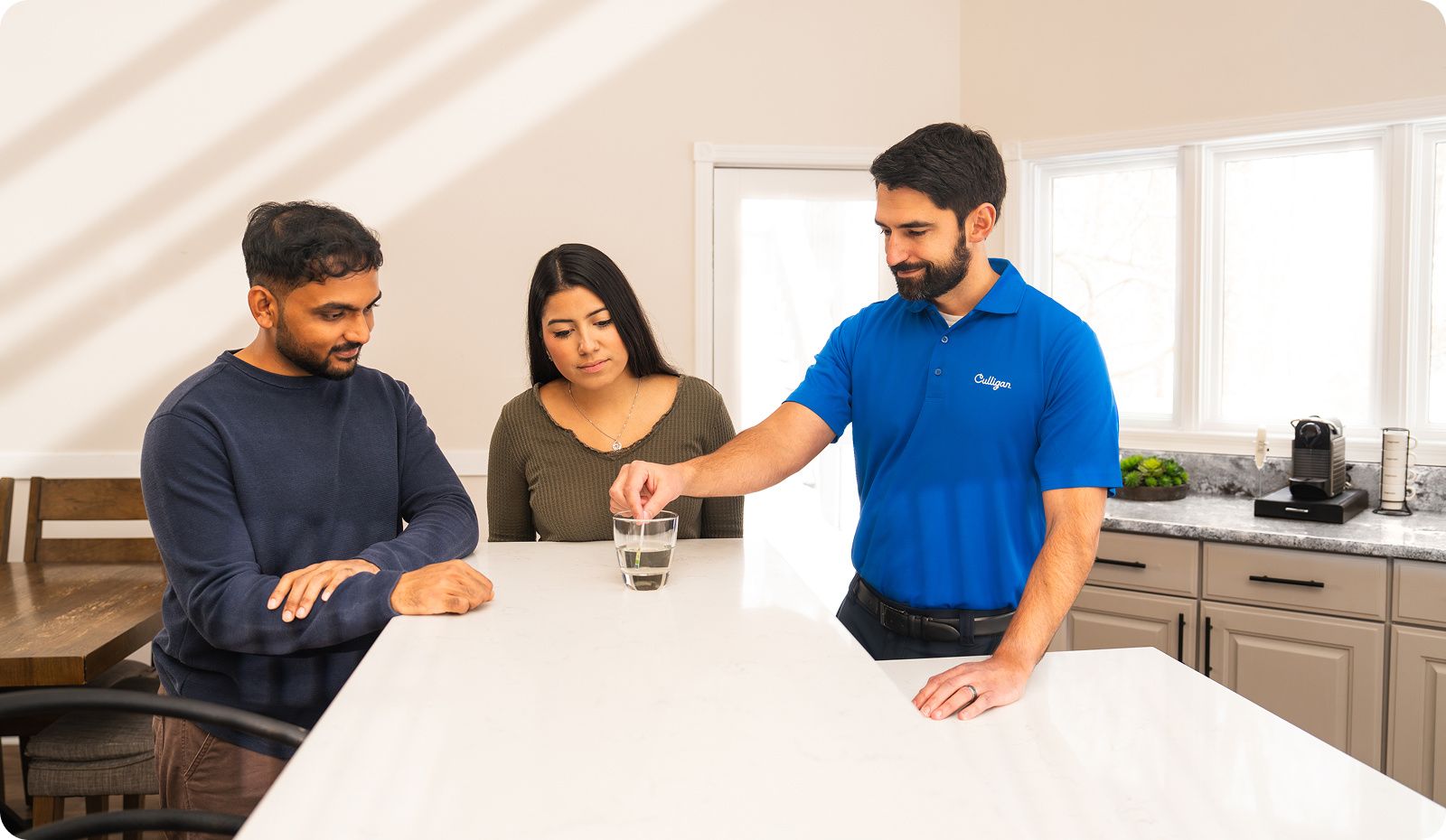
Get the full picture at once. Our free in-home test covers hardness, iron, pH, total dissolved solids and chlorine on the spot in about 20 minutes, which is enough to size a softener or iron filter. For nitrate, bacteria, chloride, arsenic, lead or PFAS we collect samples for a certified lab and review the results with you. Details are on our water testing page.
Frequently asked questions about private wells near Miami
Where does well water in the Redland and Southwest Ranches come from?
From the Biscayne Aquifer, the shallow limestone formation 50 to 200 feet down that also supplies Miami-Dade Water and Sewer, Hollywood, Miramar and the Keys. Private wells draw it untreated.
How often should I test a well in Miami-Dade County?
The Florida Department of Health recommends bacteria and nitrate at least once a year and lead about every three years, plus retesting after flooding, well work or any change in the water. In farm areas, add nitrate and pesticide screening; near the coast or canals, add chloride.
Why does my Homestead well water taste salty?
Most likely chloride from saltwater intrusion at the base of the aquifer, which USGS has mapped moving inland south of Homestead at about 335 feet a year, or from a nearby canal. A lab test confirms it, and reverse osmosis treats it for drinking water.
My well water is clear but stains the toilet orange. Why?
Dissolved iron. It is invisible when the water is drawn and turns to rust-colored particles once it meets air. An iron filter ahead of the softener takes care of it.
Can I drink well water in Davie or Southwest Ranches without treatment?
Only once a lab has confirmed it is free of bacteria and under the nitrate limit, and even then most owners treat for hardness and iron because the untreated aquifer is so hard. Testing is what turns “probably fine” into “yes.”
Get local well water expertise from Culligan of Miami
Every well is its own case, and two Redland properties on the same avenue can test differently depending on depth, construction and what sits upgradient. Culligan of Miami has worked with well homes across Homestead, Florida City, the Redland, west Kendall, Southwest Ranches, Davie and Cooper City for decades from our office in Miramar, and our technicians have seen the full range: iron so heavy it clogs irrigation heads, nitrate from a neighboring nursery, chloride creeping up year over year on wells near the coast and canals, and plain very hard water that just needs a softener.
We test first, explain what the numbers mean, and recommend only what the results support, from a single softener to a staged iron, softening, RO and UV system. Equipment is available to rent or buy, we deliver salt on a schedule, and we service what we install. See our well water solutions page for the systems we use most on local wells.
Ready for better well water? Schedule your free in-home water test and consultation with Culligan of Miami today.